
I didn’t realize there was anything lacking in the knives we had growing up. It wasn’t until I worked as a nanny in my twenties that I discovered what a difference a good kitchen knife could make—transforming meal prep from a chore into a pleasure.
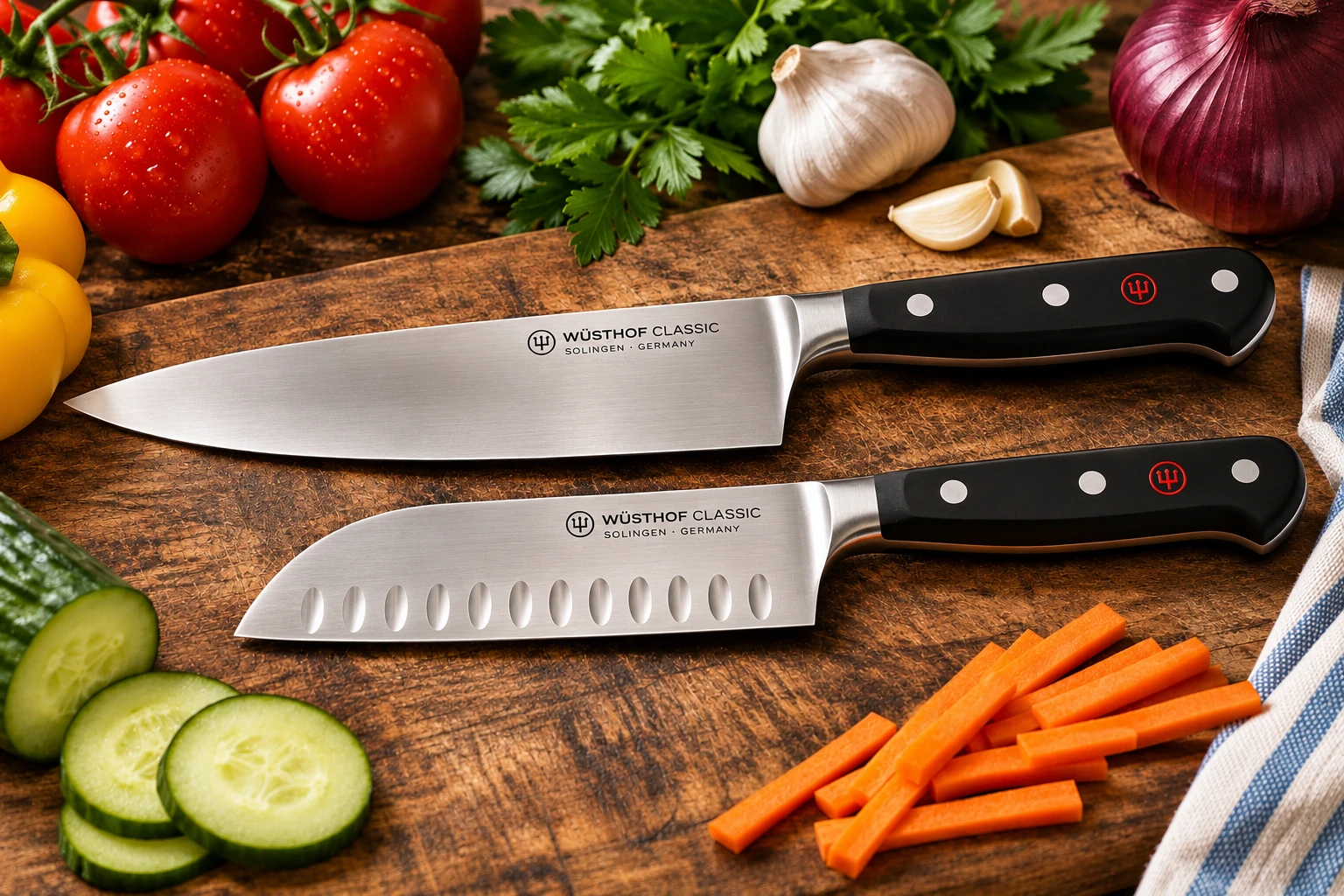
I saved up for my first Wüsthof, a five-inch Santoku with its distinctive rounded tip. Being a very small person, I found it wonderfully comfortable to use, and it became my go-to knife for almost everything. Later came an eight-inch chef’s knife, and finally a paring knife. I happily built my collection one knife at a time.
That experience taught me something worth remembering: a good kitchen knife isn’t necessarily the most expensive one, and you certainly don’t need a matching set of twelve. You need a knife that fits your hand, suits the food you prepare, and makes you look forward to using it.
One good knife often beats ten mediocre ones.
If you’re buying your first serious kitchen knife, here’s how to choose one you’ll actually enjoy.
Start With One Good Chef’s Knife
Walk into a kitchenware store and you’ll find knife blocks containing everything from bread knives to specialized carving blades. It’s tempting to think that a well-equipped kitchen requires all of them.
It doesn’t.
For most home cooks, a good chef’s knife handles the majority of everyday cutting tasks: chopping onions, slicing vegetables, mincing herbs, dicing meat, and preparing ingredients for dinner.
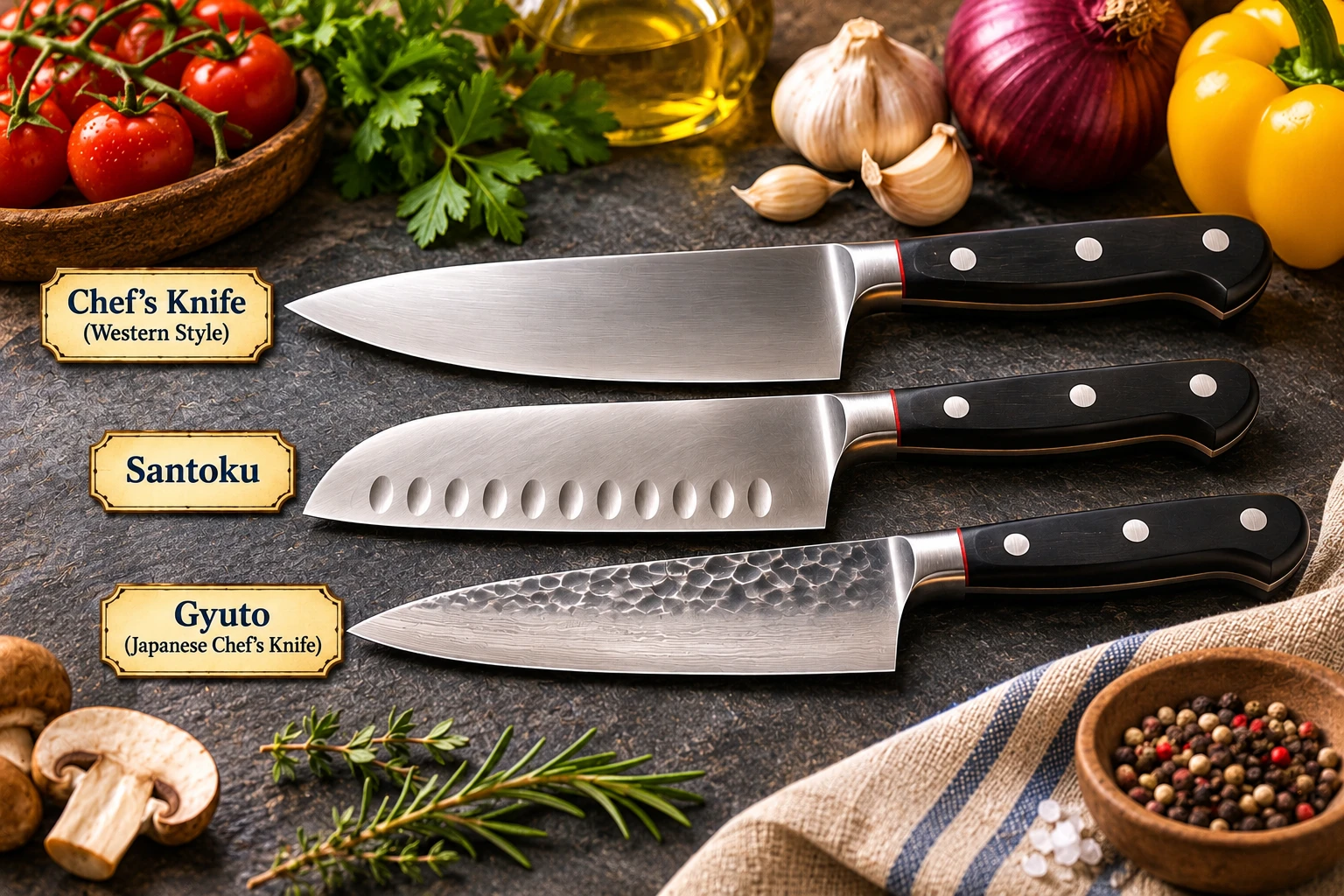
A traditional Western chef’s knife has a broad blade, a pointed tip, and a curved cutting edge that allows a rocking motion against the cutting board. Its versatility makes it an excellent starting point.
Rather than spending your budget on a large assortment of mediocre knives, consider investing in one comfortable, well-made chef’s knife. You can add other knives as you discover what you genuinely need.
Chef’s Knife, Santoku, or Gyuto?
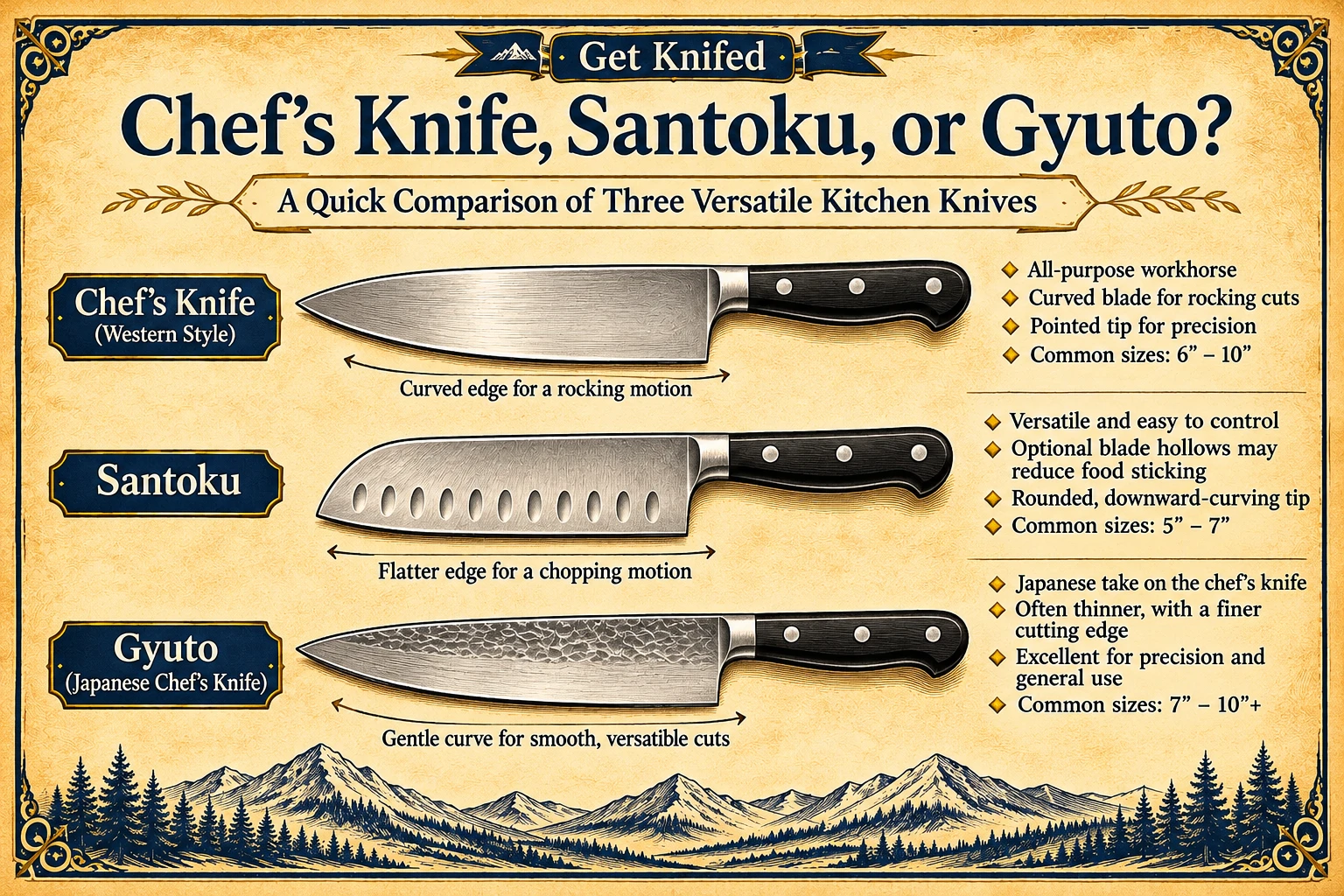
Not every all-purpose kitchen knife looks or behaves the same way. Three popular styles deserve consideration.
Western Chef’s Knife
The classic European-style chef’s knife generally has a curved edge and a substantial blade. It works well for rocking cuts, chopping vegetables, and handling a wide variety of ingredients.
Many Western knives also have relatively robust edges, making them practical for everyday home cooking.
Santoku
The santoku originated in Japan. Its name is commonly interpreted as referring to three virtues or uses, often associated with meat, fish, and vegetables.
Santoku knives typically have shorter, wider blades with flatter cutting edges than Western chef’s knives. They’re particularly comfortable for cooks who prefer an up-and-down chopping motion rather than pronounced rocking.
Their compact size makes them appealing in smaller kitchens.
Gyuto
The gyuto is a Japanese-style chef’s knife influenced by Western designs. It generally has a pointed tip and a versatile blade profile, often with a thinner cutting geometry than a typical German-style chef’s knife.
A gyuto can be an excellent choice for someone who enjoys precise slicing and careful ingredient preparation.
However, thinner edges may require more attention to technique and cutting surfaces.
Which should you choose? The one that feels natural in your hand and matches the way you cook. There’s no universal winner.
Finding the Right Blade Length
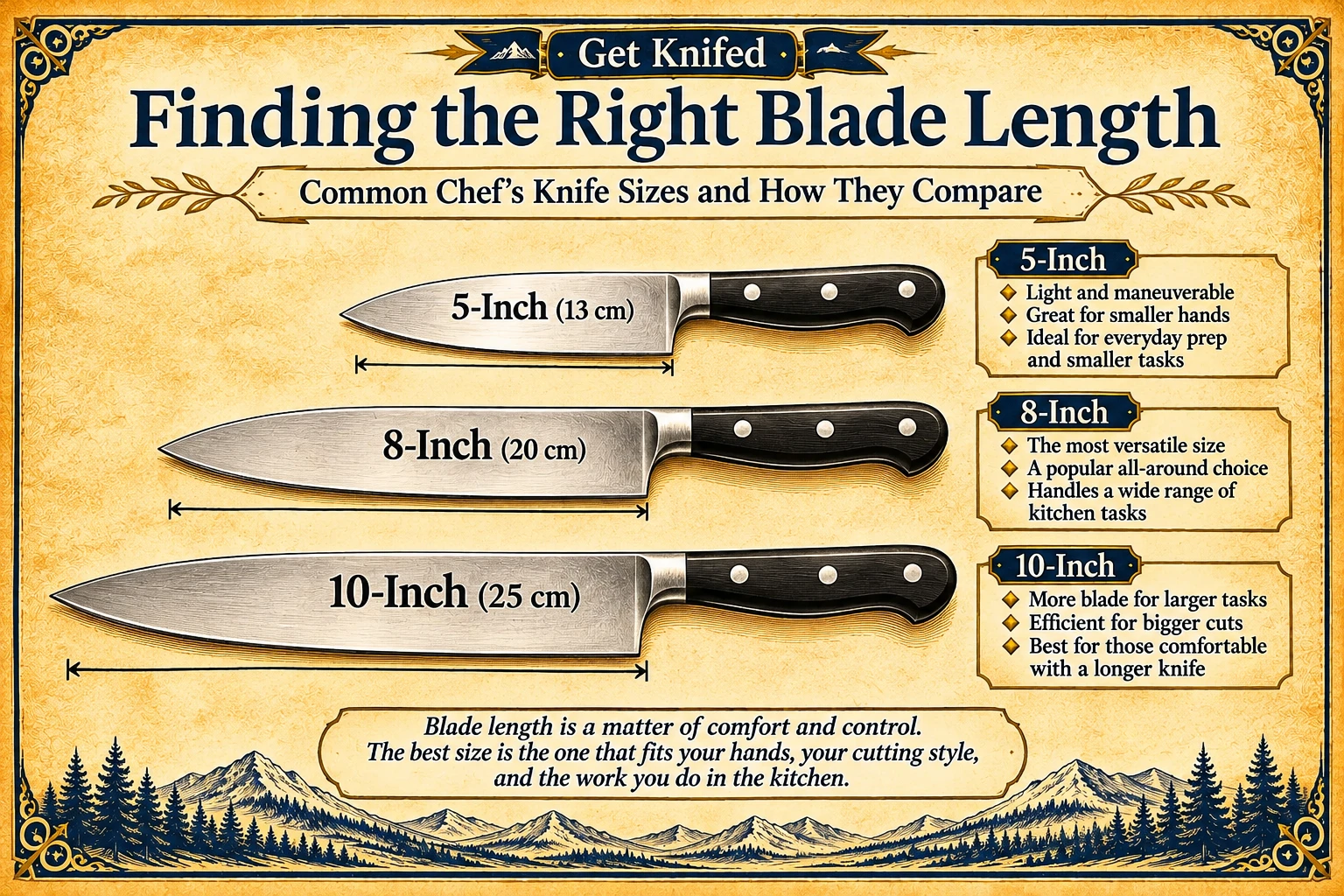
Kitchen knives are commonly measured by blade length, and even a difference of two inches can change how a knife feels.
Five- to six-inch knives are compact and maneuverable. They’re useful for smaller hands, limited counter space, and detailed preparation. Their shorter blades can make larger ingredients more cumbersome to cut.
Eight-inch knives are popular for good reason. They offer enough length for most vegetables and proteins without becoming unwieldy. For many home cooks, an eight-inch chef’s knife is a sensible first purchase.
Ten-inch knives provide additional cutting length, particularly useful for larger ingredients or high-volume preparation. However, they can feel cumbersome on small cutting boards.
Although an eight-inch chef’s knife is often recommended as the standard starting point, don’t assume a larger knife is automatically better. You may find, as I did, that a smaller knife is more comfortable and practical. Blade length should suit your hands, your cutting style, and the tasks you perform—not someone else’s idea of the perfect knife.
If possible, visit a kitchenware store and handle several sizes. A knife that feels perfectly balanced to one person may feel awkward to another.
Stainless Steel or Carbon Steel?
The steel in your knife affects how it sharpens, how it holds an edge, and how much maintenance it requires.
Stainless Steel
Most modern kitchen knives use stainless steel, which contains enough chromium to improve resistance to corrosion.
Stainless steel is practical for everyday cooking because it generally tolerates moisture and acidic foods better than traditional carbon steel.
That doesn’t mean stainless knives are completely rustproof. They still need washing and drying after use.
Carbon Steel
Carbon steel knives are prized by some cooks for their sharpening characteristics and cutting performance.
However, they require more attention. Moisture and acidic ingredients can cause discoloration or rust, and the blade often develops a dark patina with use.
A patina isn’t necessarily a defect; it’s a natural reaction between the steel and its environment.
For a beginner who wants straightforward maintenance, stainless steel is usually the easier choice.
Remember that steel composition alone doesn’t determine quality. Heat treatment, blade geometry, and sharpening all contribute to how a knife performs.
Handle, Balance, and Comfort
A beautiful knife isn’t much use if it’s uncomfortable to hold.
Kitchen knife handles come in wood, synthetic materials, composites, and metal. Each has advantages, but comfort matters more than appearance.
When examining a knife, pay attention to how the handle fits your hand. Does it feel secure? Are there sharp corners or uncomfortable edges? Can you maintain a relaxed grip?
Many cooks use a pinch grip, holding the blade gently between thumb and forefinger just ahead of the handle while the remaining fingers wrap around it.
This offers good control, but the knife should feel comfortable with your preferred safe grip.
Balance matters, too. Some knives feel heavier toward the blade; others feel more centered around the handle.
Neither is automatically superior.
If you can, try a few controlled cutting motions with a store demonstration knife under appropriate supervision. The right knife should feel manageable rather than tiring.
Forged Versus Stamped: Does It Matter?
You’ll often see kitchen knives advertised as either forged or stamped.
Traditionally, a forged knife is shaped from heated steel using mechanical force, while a stamped knife is cut from sheet or plate steel and subsequently ground, heat-treated, and finished.
Forged knives are sometimes heavier and may feature a bolster, the thicker area near the junction of blade and handle.
Stamped knives are often lighter and can be less expensive.
But here’s the important part: forged doesn’t automatically mean better, and stamped doesn’t automatically mean cheap.
Excellent knives are made using both methods.
The quality of the steel, heat treatment, edge geometry, construction, and finishing matters far more than the manufacturing label alone.
How Much Should You Spend?
You don’t need to spend several hundred dollars to buy a dependable kitchen knife.
As a general starting point, here’s what different budgets may offer:
- Under $40: Practical entry-level knives, including some excellent utilitarian models with simple handles and finishes.
- $40–$100: A broad selection of capable knives with different handle shapes, blade profiles, and construction styles.
- $100–$200: More premium choices, sometimes offering refined finishing, specialized steels, or particular design characteristics.
- Above $200: Professional, artisan, and specialty knives where craftsmanship, materials, aesthetics, or brand reputation may account for a substantial part of the price.
These are broad shopping ranges, not guarantees of performance.
A well-maintained $50 knife can be far more useful than a neglected $250 knife.
If your budget is limited, prioritize a comfortable chef’s knife and a decent cutting board. Other tools can come later.
Caring for Your First Kitchen Knife
Wash and Dry by Hand
Wash your knife with mild dish soap and warm water, keeping your fingers away from the cutting edge. Dry it promptly.
Even when a manufacturer describes a knife as dishwasher-safe, handwashing is generally gentler on the blade and handle.
Use the Right Cutting Board
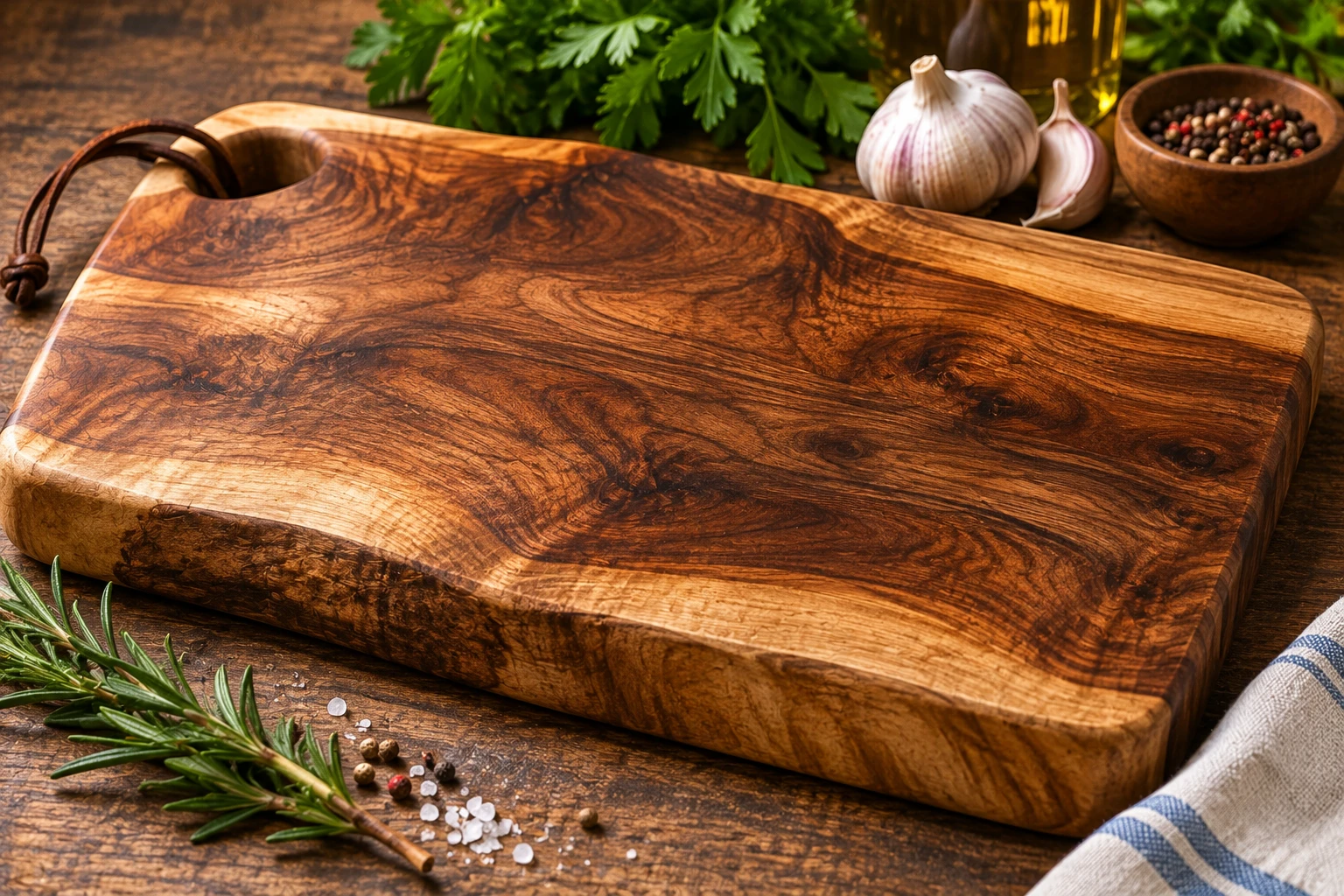
Wood and suitable plastic cutting boards are kinder to knife edges than glass, stone, or ceramic surfaces.
Learn the Difference Between Honing and Sharpening
Honing and sharpening aren’t the same thing.
Honing helps maintain or realign an edge, depending on the tool and steel involved. Sharpening removes material to restore the cutting edge.
A honing rod may help maintain some kitchen knives between sharpenings, but not every rod is appropriate for every blade.
A whetstone, suitable guided sharpener, or professional sharpening service can restore an edge that has become genuinely dull.
Learning basic knife maintenance is one of the best investments you can make in your kitchen.
Store It Safely
Use a blade guard, properly designed knife block, drawer insert, or secure magnetic rack.
Choose a storage method that protects the blade.
Do You Really Need a Knife Set?
For most beginners, my answer is no.
A large matching knife set may look impressive on the countertop, but it often includes several knives you’ll rarely use.
Instead, consider building a small collection around your actual cooking habits.
Start with a versatile chef’s knife.
Add a paring knife when you find yourself regularly peeling fruit, trimming small vegetables, or handling delicate tasks.
A serrated bread knife may be your next useful purchase, especially if you frequently slice crusty bread or other foods with tough exteriors and soft interiors.
Beyond those essentials, let experience guide you.
Perhaps you’ll eventually want a boning knife, carving knife, or specialized Japanese blade. Perhaps you won’t.
There’s no reason to buy a tool before you know why you need it.
The First Cut: Your Kitchen Knife Buying Checklist
Before making your purchase, ask yourself:
- Does the knife feel comfortable and secure in my hand?
- Is the blade length suitable for my cutting board and typical ingredients?
- Do I prefer a rocking motion or a flatter chopping motion?
- Am I comfortable with the maintenance the steel requires?
- Is the knife’s weight manageable during extended preparation?
- Can I maintain or sharpen it appropriately?
- Am I paying for useful quality rather than unnecessary extras?
If you can answer these questions confidently, you’re already making a more informed decision than someone choosing solely by brand name or appearance.
A Good Knife Earns Its Place
A good kitchen knife doesn’t have to be flashy. It doesn’t need an exotic handle, a complicated history, or an enormous price tag.
It needs to work well, feel right, and stand up to the ordinary demands of preparing meals.
My own collection began with a single five-inch Wüsthof, followed by two more knives as I discovered what I needed. I eventually added a bread knife. I didn’t buy everything at once.
That’s still the approach I’d recommend today.
Start with one good knife. Learn to use it, care for it, and appreciate what it can do.
You may discover, as I did, that the right knife changes not just how you prepare a meal, but how much you enjoy the process.