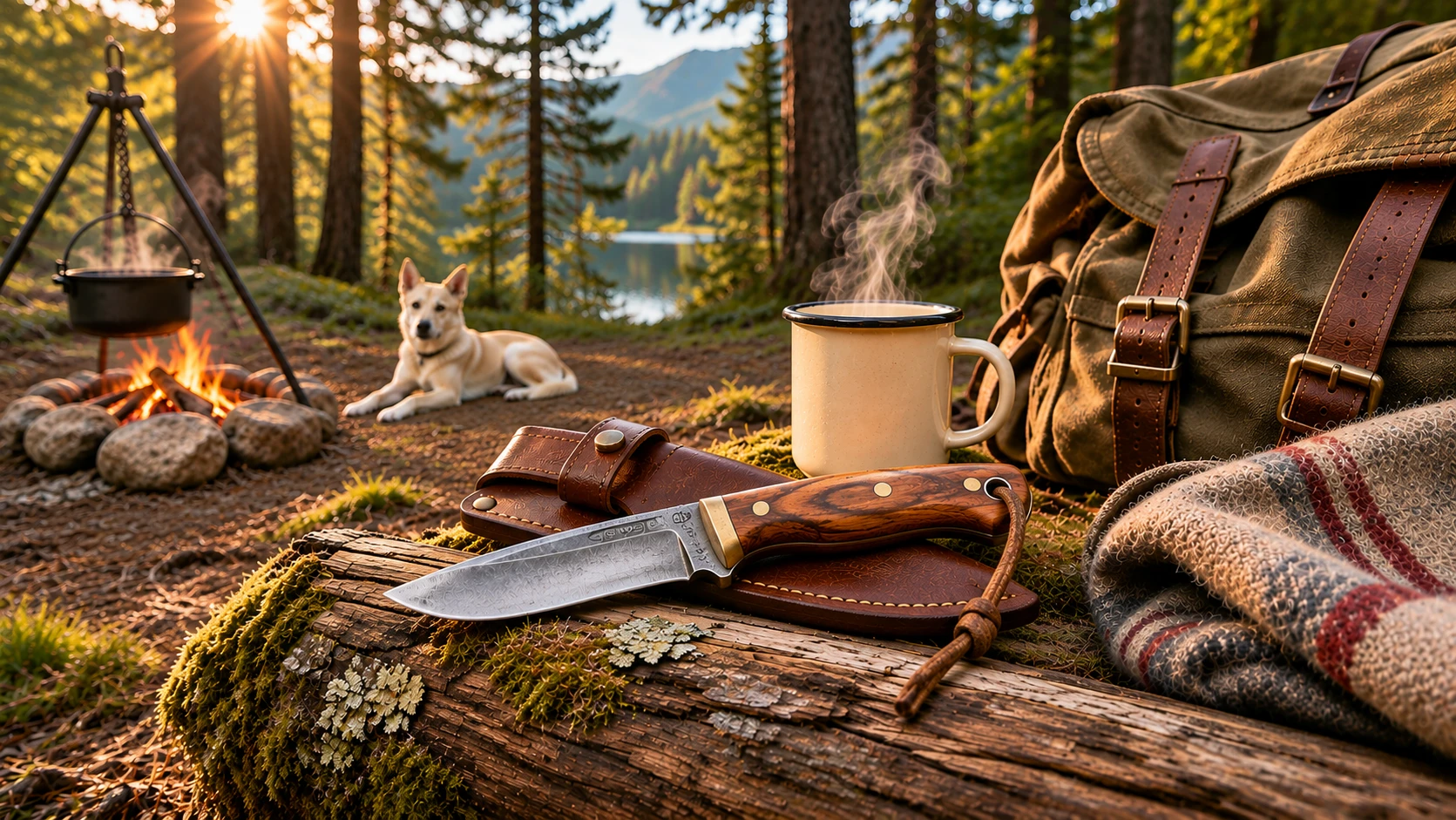
Some companions, like Okami, have four paws, others a well-crafted blade. Both have their place on the trail.
There is something wonderfully satisfying about sitting beside a campfire, preparing a meal outdoors, and spending a little time away from the conveniences of modern life.
Out there, even the simplest tools take on greater importance. Among them, few are as versatile as a good camping knife.
Whether you are spending a weekend at an established campground or exploring the backcountry, a dependable knife can make everyday outdoor tasks considerably easier.
But choosing your first camping knife can be surprisingly complicated. With countless blade shapes, steel types, handle materials, and price ranges, where do you begin?
Fortunately, you don’t need the biggest, most expensive, or most technologically advanced knife on the market.
You need one that suits you.
What Is a Camping Knife?
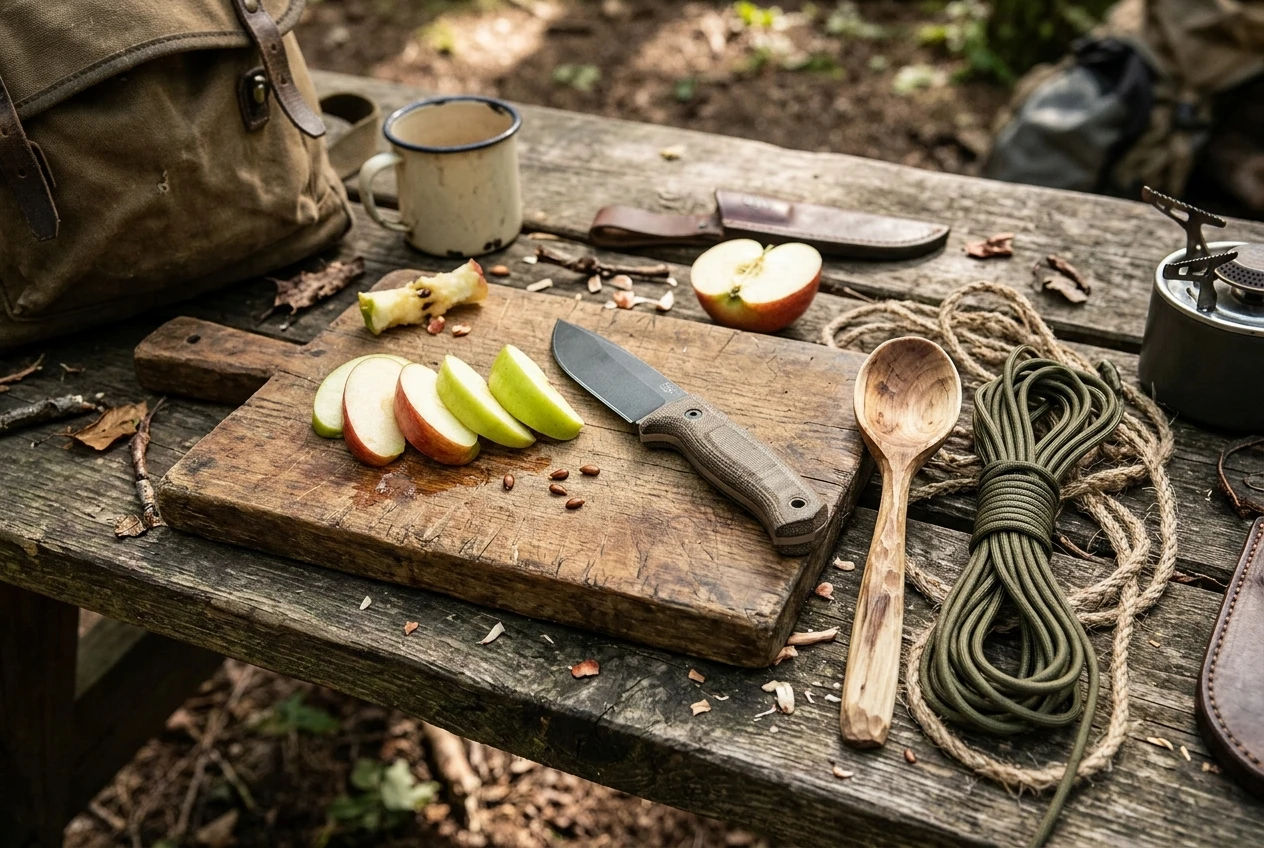
A dependable camping knife is useful for everything from preparing food to cutting cordage and carving wooden utensils.
Unlike a kitchen knife, which is designed primarily for food preparation, a camping knife is a general-purpose outdoor tool.
A good camping knife can help you with:
- Preparing food at camp
- Cutting cordage and rope
- Opening packages
- Making simple campsite repairs
- Carving wooden utensils
- Preparing small pieces of tinder
- Completing everyday outdoor tasks
The ideal camping knife balances versatility, durability, comfort, and ease of maintenance.
It should be a tool you enjoy using rather than something you carry simply because it looks impressive.
Camping, Bushcraft, and Survival Knives: What’s the Difference?
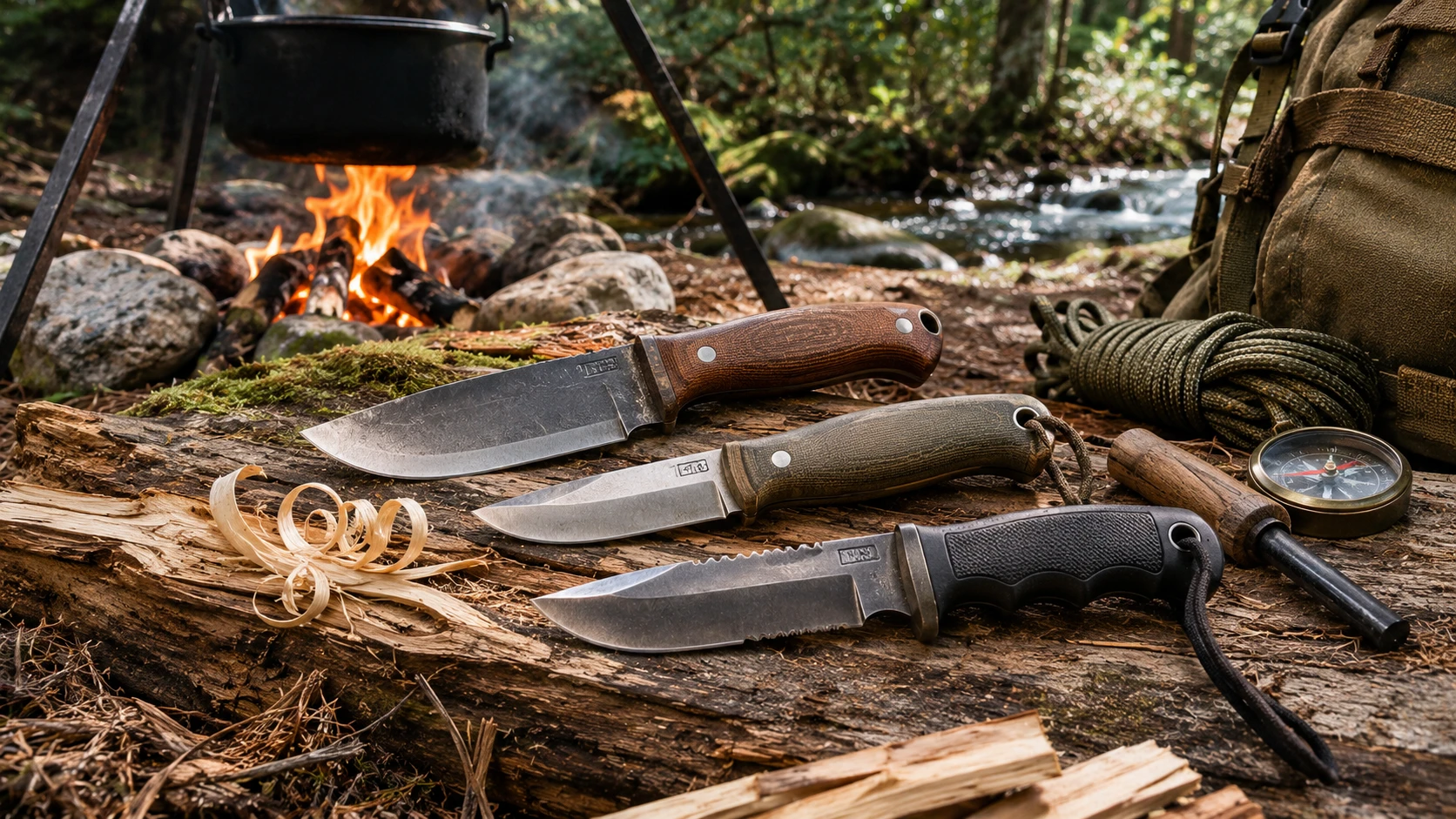
From top to bottom: a general-purpose camping knife, a traditional bushcraft-style knife, and a rugged survival-style knife. Although their intended purposes differ, there is considerable overlap between these three categories.
These terms are frequently used interchangeably, but they generally describe knives with somewhat different purposes.
Knife Type | Primary Purpose | Typical Characteristics |
|---|---|---|
Camping knife | General outdoor tasks | Versatile, comfortable, manageable |
Bushcraft knife | Traditional woodland skills | Sturdy, controlled woodworking blade |
Survival knife | Emergency outdoor utility | Durable construction and broad functionality |
Backpacking knife | Lightweight travel | Compact and easy to carry |
Outdoor cooking knife | Campsite food preparation | Thin blade with good slicing ability |
There is considerable overlap between these categories. A well-designed camping knife may serve several of these purposes.
For your first knife, versatility is usually more valuable than specialization.
Fixed Blade or Folding Knife?
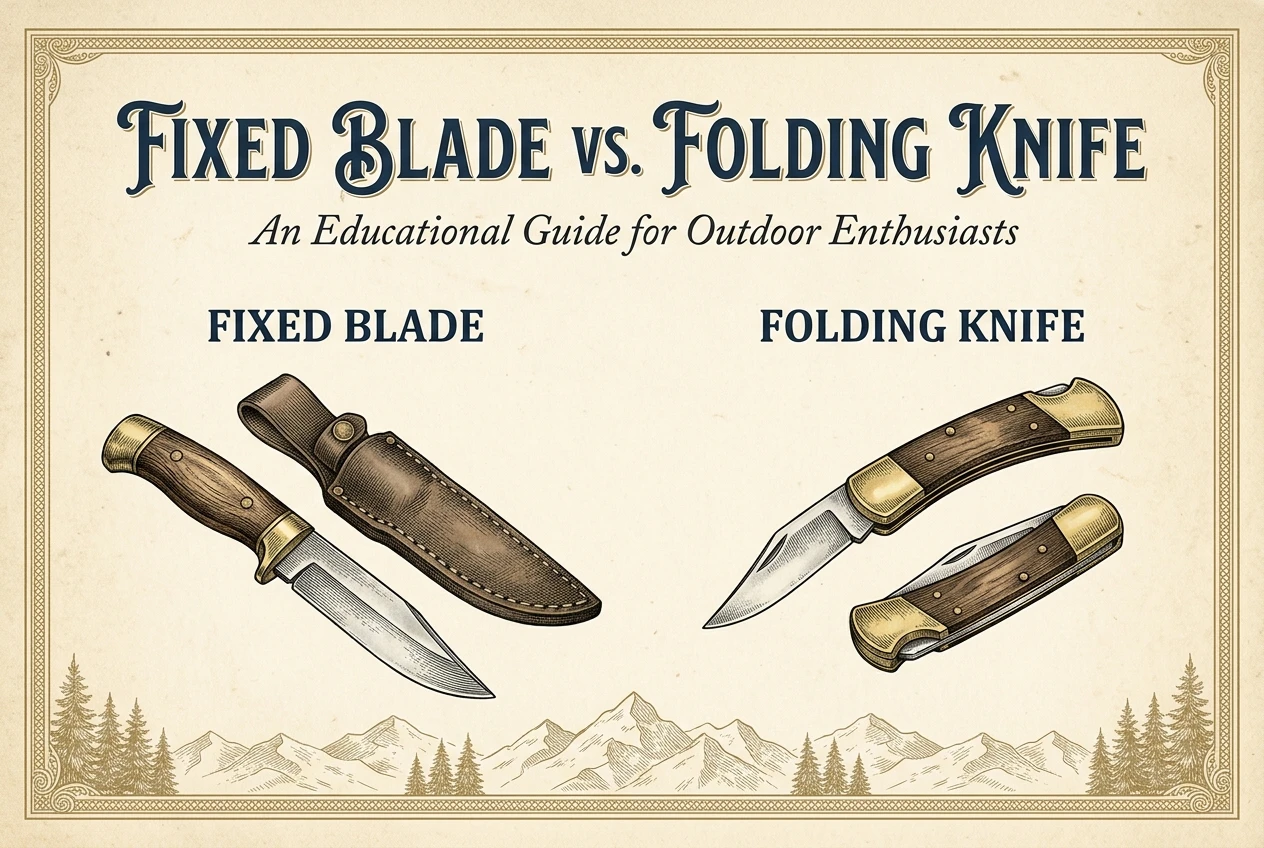
Fixed-blade knives offer simplicity and durability, while folding knives provide the convenience of compact storage and portability.
One of your first decisions will be whether to choose a fixed-blade knife or a folding knife.
Fixed-Blade Knives
A fixed-blade knife has a blade that remains permanently extended from the handle and is normally carried in a protective sheath.
Because it has no folding mechanism, it is generally simpler to clean and maintain.
Advantages:
- Simple, durable construction
- Easy to clean
- No folding mechanism to maintain
- Well suited to frequent outdoor use
Disadvantages:
- Less compact
- Requires a secure sheath
- Can be less convenient to carry
Folding Knives
A folding knife allows the blade to fold into the handle, making it compact and convenient.
Advantages:
- Lightweight and portable
- Convenient for casual camping
- Easy to store
- Often sufficient for ordinary campsite tasks
Disadvantages:
- Moving parts require maintenance
- Dirt and moisture can collect inside the handle
- Generally less suitable for demanding tasks
For occasional campground visits, a quality folding knife may be all you need. For more frequent outdoor use, a modest fixed-blade knife is worth considering.
Understanding Tang Construction
If you choose a fixed-blade knife, you will probably encounter the term tang.
The tang is the portion of the blade steel that extends into the handle.
A full tang extends through the length and generally much of the width of the handle. Other designs, including partial and hidden tangs, use different construction methods.
Full-tang knives are often associated with durability, but tang construction alone does not determine quality. The steel, heat treatment, handle design, and overall workmanship are equally important.
Many excellent traditional outdoor knives use hidden or partial tang construction.
A knife should be judged as a complete tool rather than by a single design feature.
For a closer look at knife construction, see our article The Anatomy of a Knife.
Choosing the Right Blade Size
Bigger is not necessarily better.
Large knives may look impressive, but they can be cumbersome when performing the ordinary tasks that occupy most of our time outdoors.
A manageable blade is often easier to control, more comfortable to carry, and better suited to food preparation and small campsite chores.
Think about what you will actually be doing rather than what you imagine you might encounter in an extreme survival scenario.
Remember, a camping knife is not a substitute for a saw, hatchet, or other specialized tool.
Blade Steel: Carbon or Stainless?
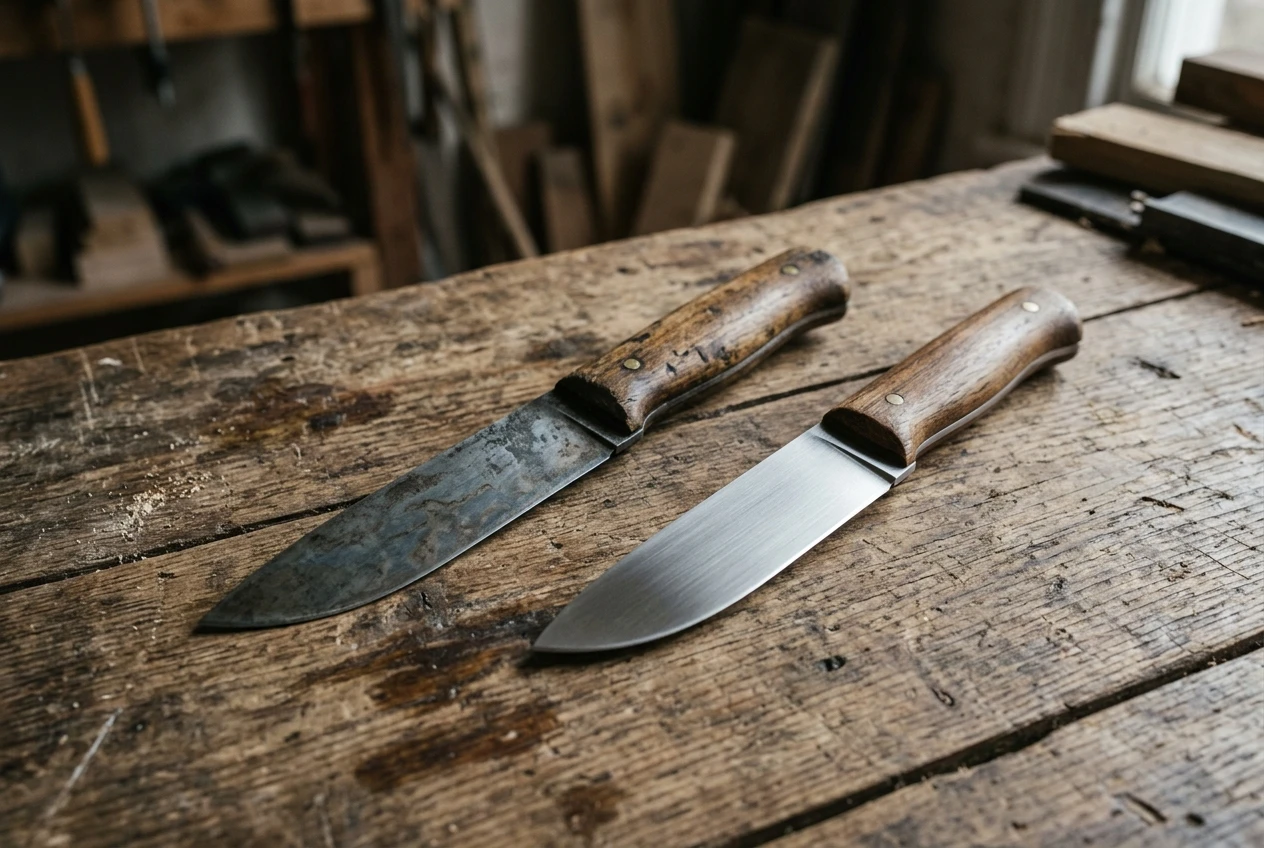
Carbon steel (left) can develop a natural patina over time, while stainless steel (right) generally offers greater resistance to corrosion and discoloration. Both benefit from proper care.
Blade steel influences how a knife performs, how easily it can be maintained, and how well it withstands outdoor conditions.
Carbon Steel
Carbon-steel knives have a long history in outdoor and traditional woodworking tools.
They are often appreciated for their ease of sharpening and dependable performance.
However, many carbon steels are susceptible to rust and require regular cleaning and drying.
Stainless Steel
Stainless steel offers greater corrosion resistance, making it particularly attractive for camping in humid climates, near water, or during extended periods outdoors.
Stainless does not mean rustproof, however. All knives benefit from proper care.
Characteristic | Carbon Steel | Stainless Steel |
|---|---|---|
Corrosion resistance | Generally lower | Generally higher |
Maintenance | More frequent | Generally less demanding |
Ease of sharpening | Varies by steel | Varies by steel |
Outdoor suitability | Excellent with proper care | Excellent, particularly in damp conditions |
For many first-time buyers, stainless steel is a convenient choice because of its relatively low maintenance requirements.
For a more detailed explanation, read Knife Steel Explained: A Beginner’s Guide.
The Importance of a Comfortable Handle
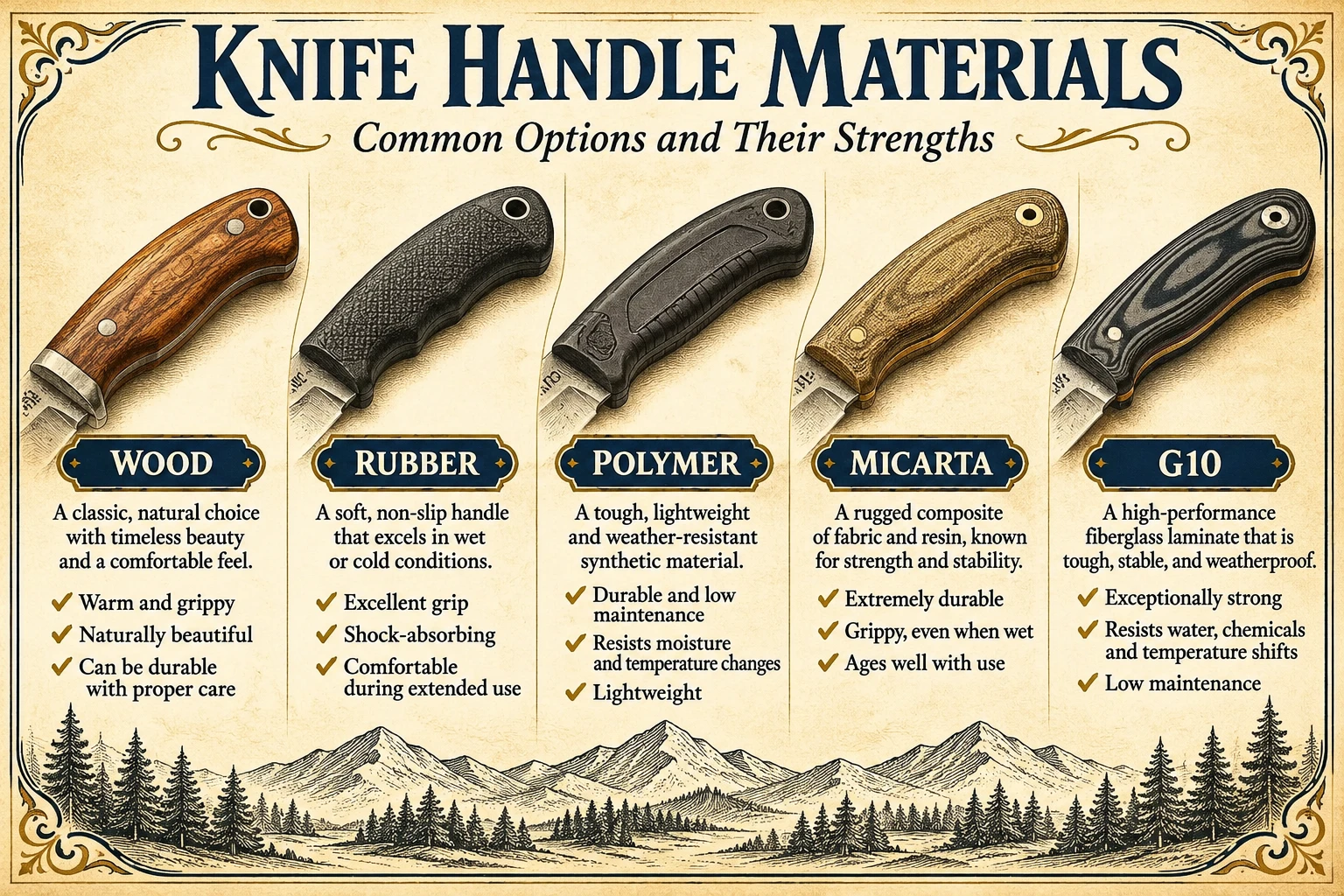
Five common camping knife handle materials, each offering a different balance of comfort, durability, appearance and maintenance.
A beautiful blade attached to an uncomfortable handle is not a particularly useful knife.
Handle comfort becomes especially important when working outdoors, where your hands may be cold, damp, or tired.
Common handle materials include:
- Wood: Traditional, attractive, and comfortable, although it may require occasional maintenance.
- Rubber: Often provides a comfortable grip in damp conditions.
- Synthetic polymers: Generally lightweight, durable, and easy to clean.
- Micarta: A layered composite material valued for its durability.
- G10: A fiberglass-based composite known for its strength and moisture resistance.
Pay attention to the shape and size of the handle, not simply the material.
A knife that feels comfortable in someone else’s hand may not feel comfortable in yours.
Whenever possible, handle a knife before purchasing it.
Don’t Overlook the Sheath
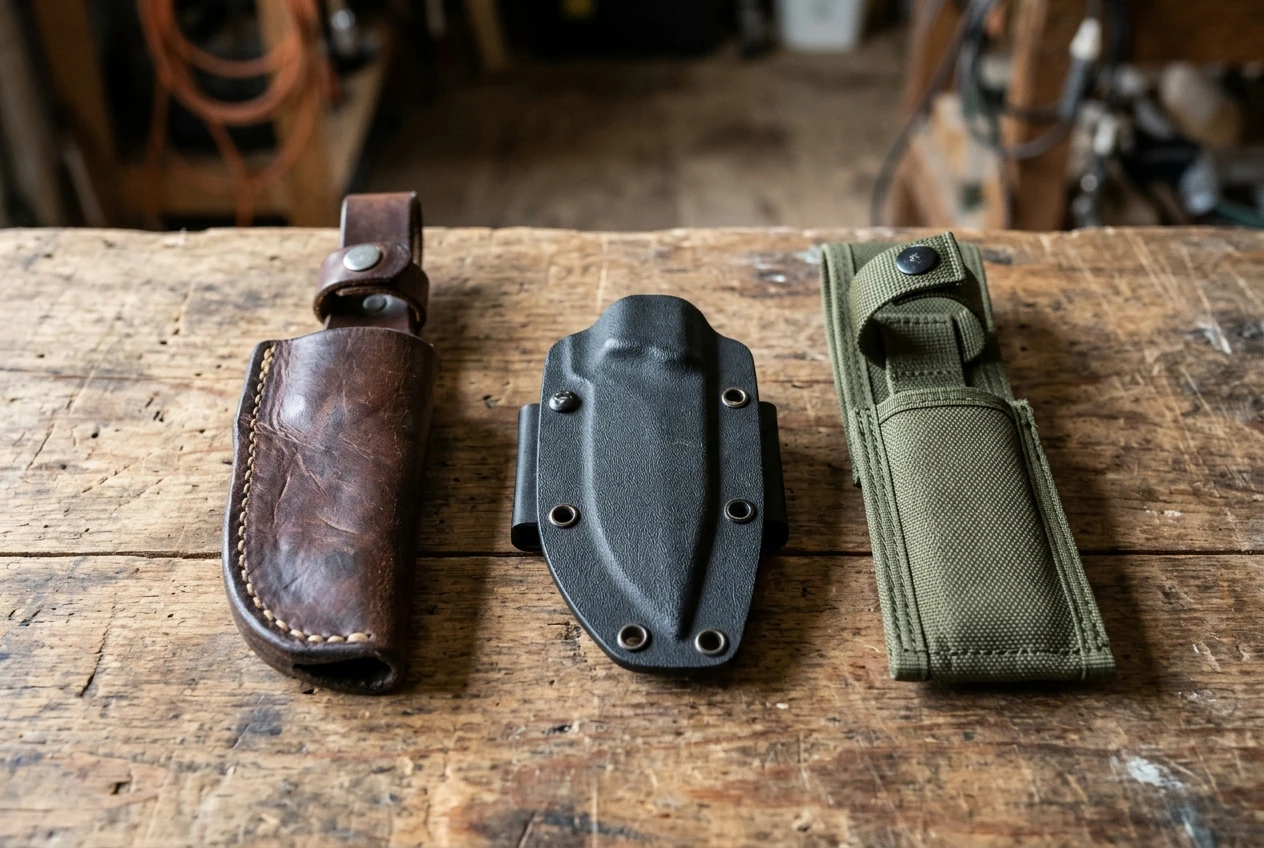
Three common sheath materials, from left to right: traditional leather, molded thermoplastic and reinforced nylon. Each offers different advantages in durability, weight and weather resistance.
A fixed-blade knife is only as convenient to carry as its sheath allows.
A good sheath protects both the blade and the person carrying it.
Common sheath materials include leather, molded thermoplastics, and reinforced synthetic fabrics.
Leather has a traditional appearance and can last for many years with proper care. Molded synthetic sheaths are generally easier to clean and less affected by moisture.
Look for secure retention, sound construction, and adequate coverage of the cutting edge.
A poorly made sheath can turn an otherwise excellent camping knife into an inconvenient or unsafe tool.
How Much Should You Spend?
You do not need to spend a fortune on your first camping knife.
There are well-made, affordable outdoor knives that can provide years of dependable service.
More expensive knives may offer premium steels, refined craftsmanship, specialized materials, or distinctive designs. These qualities can be worth paying for, but they are not essential for someone just beginning to explore outdoor life.
Spend your money on quality construction, comfort, and practicality rather than appearance alone.
Your first knife should also help you discover what you value in a knife before you invest in something more specialized.
Common First-Time Buying Mistakes
Buying for Appearance Alone
An attractive knife is certainly enjoyable to own, but appearance should not take precedence over functionality.
Buying More Knife Than You Need
A large, heavy knife may spend more time at home than outdoors.
Ignoring Maintenance Requirements
Even an excellent blade can deteriorate when repeatedly exposed to moisture and stored without cleaning.
Overlooking Handle Comfort
Specifications cannot tell you everything about how a knife feels in your hand.
Expecting One Tool to Do Everything
A knife is a versatile tool, but some jobs are better accomplished with a saw, scissors, or another purpose-built implement.
Caring for Your Camping Knife
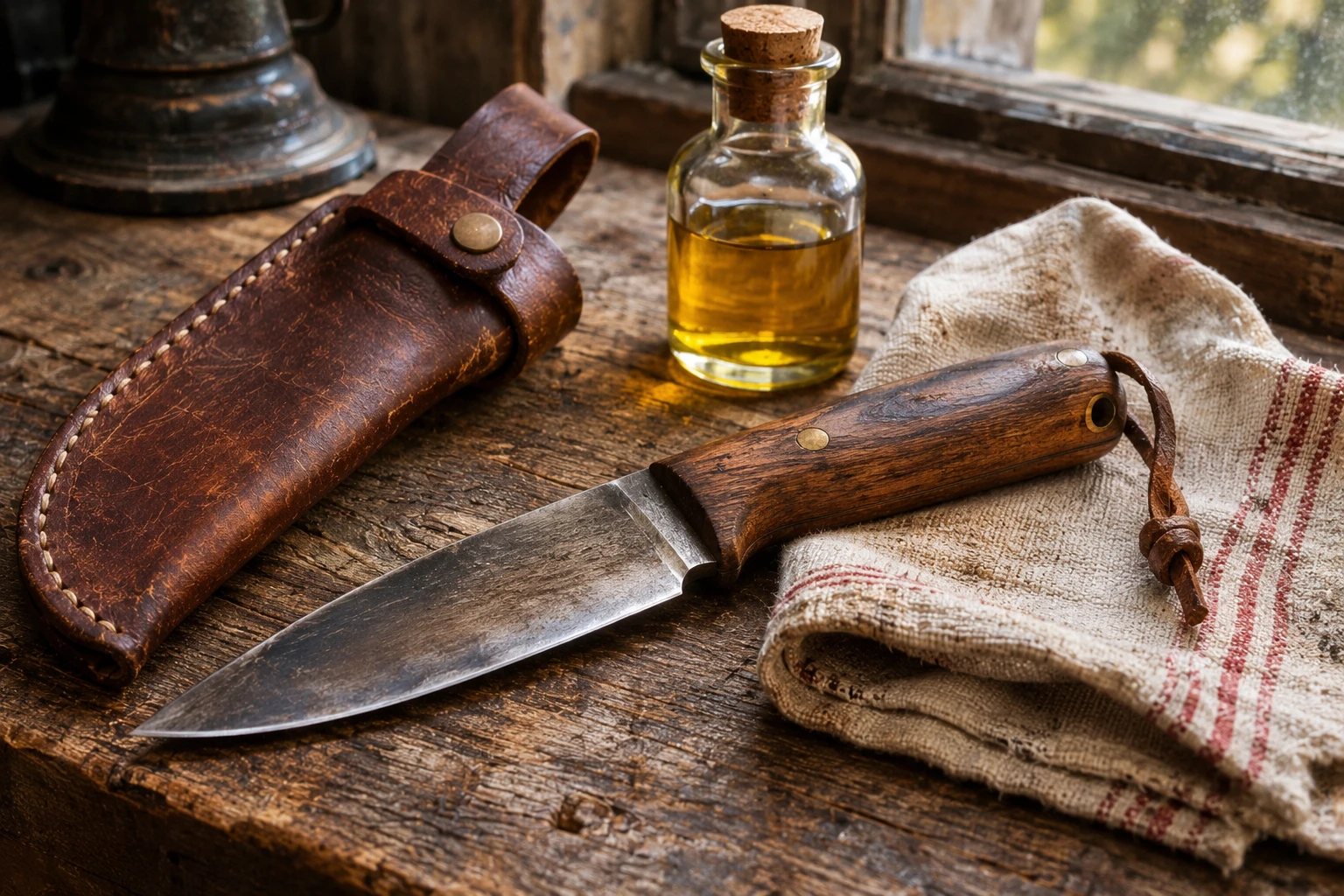
A little regular care goes a long way. Keep your camping knife clean, dry and lightly oiled when appropriate, and store it in a dry place between adventures.
A little attention after each camping trip can greatly extend the life of your knife.
- Clean the blade after use.
- Dry it thoroughly before storage.
- Keep the sheath clean and dry.
- Apply an appropriate protective oil when necessary, using food-safe products for food preparation knives.
- Inspect the handle, sheath, and any moving parts periodically.
- Store the knife securely, away from children.
Always check local knife laws and campground regulations before traveling with a knife.
A good knife deserves good care.
Your First Camping Knife Checklist
Before making a purchase, ask yourself:
- What outdoor activities do I enjoy?
- Would a folding knife or fixed blade better suit my needs?
- Is the handle comfortable?
- Is the knife easy to carry and maintain?
- Does it have a secure sheath or reliable folding mechanism?
- Am I paying for useful features or simply an impressive appearance?
The answers will help narrow your choices considerably.
A Companion for the Journey
A camping knife is more than another piece of outdoor equipment.
Over time, it may become associated with quiet mornings in the woods, meals prepared beneath the open sky, and journeys shared with friends and family.
The scratches on its handle and the wear on its blade may eventually tell a story of their own.
Choose thoughtfully, use it responsibly, and take care of it.
Your first camping knife need not be extraordinary.
It simply needs to be there when you need it.
Get Knifed — Where the Edge Matters.